Quick Facts
- 49% of U.S. consumers say patriotic branding makes them view a brand more positively, but 63% trust companies that invest in local jobs over those running patriotic ads.
- Gallup reports extreme national pride hit a 25-year low in 2026, with just 33% of Americans expressing extreme pride in their national identity.
- Wolverine launched a USA-built work boot tied to an America 250 campaign honoring workers in all 50 states.
As America marks its 250th anniversary, brands are discovering that flying the flag is not enough. Consumers want proof.
A new survey from consumer insights firm Zappi, which polled 2,000 U.S. adults in June 2026, found that nearly half of respondents say patriotic branding improves their view of a brand. Only 16% react negatively, and just 3% think brands should skip the celebration entirely.
But the same data shows the bar is higher than a red, white, and blue color palette. Nearly two-thirds of respondents said they trust companies that invest in local jobs more than companies that run patriotic ads. Fifty-nine percent said brands that celebrate people and communities feel more genuine than brands leaning on national symbols.
A Nation Split on Pride
The backdrop is not simple. Gallup reported that extreme national pride fell 8 percentage points between 2025 and 2026, from 41% to 33%, tying the steepest single-year drop on record. Gallup Senior Editor Megan Brenan noted that pride has been declining for two decades, but the pace has accelerated recently.
The divide runs along partisan and generational lines. More than 90% of Republicans told an NPR/PBS News/Marist poll they are proud or very proud to be American. Only 45% of Democrats said the same. Among adults aged 56 to 75, 56% say they are very proud to be American. Among adults aged 18 to 25, that figure drops to 29%.
Older consumers are nearly twice as likely as Gen Z to want brands celebrating national pride around July 4, at 28% versus 17%. Gen Z consumers are nearly three times as likely to want brands standing up for social causes, at 18% versus 6%.
What Consumers Actually Want
The Zappi data shows consumers define America through people, not products. When asked what brands should celebrate, history and heritage ranked first at 20%, followed by people and communities at 19%, diversity at 16%, and values at 16%. Products and manufacturing ranked last at 8%.
Around July 4 specifically, value and discounts ranked as the top priority for 27% of respondents. Support for local communities came second at 22%. Celebrating national pride ranked third at 19%.
The Made in America label still carries weight. Sixty-four percent of respondents said they would pay more for a product designated as Made in America. Twenty-nine percent said they would pay significantly more. Still, 22% said they would choose the cheaper option regardless of origin.
Wolverine’s Approach
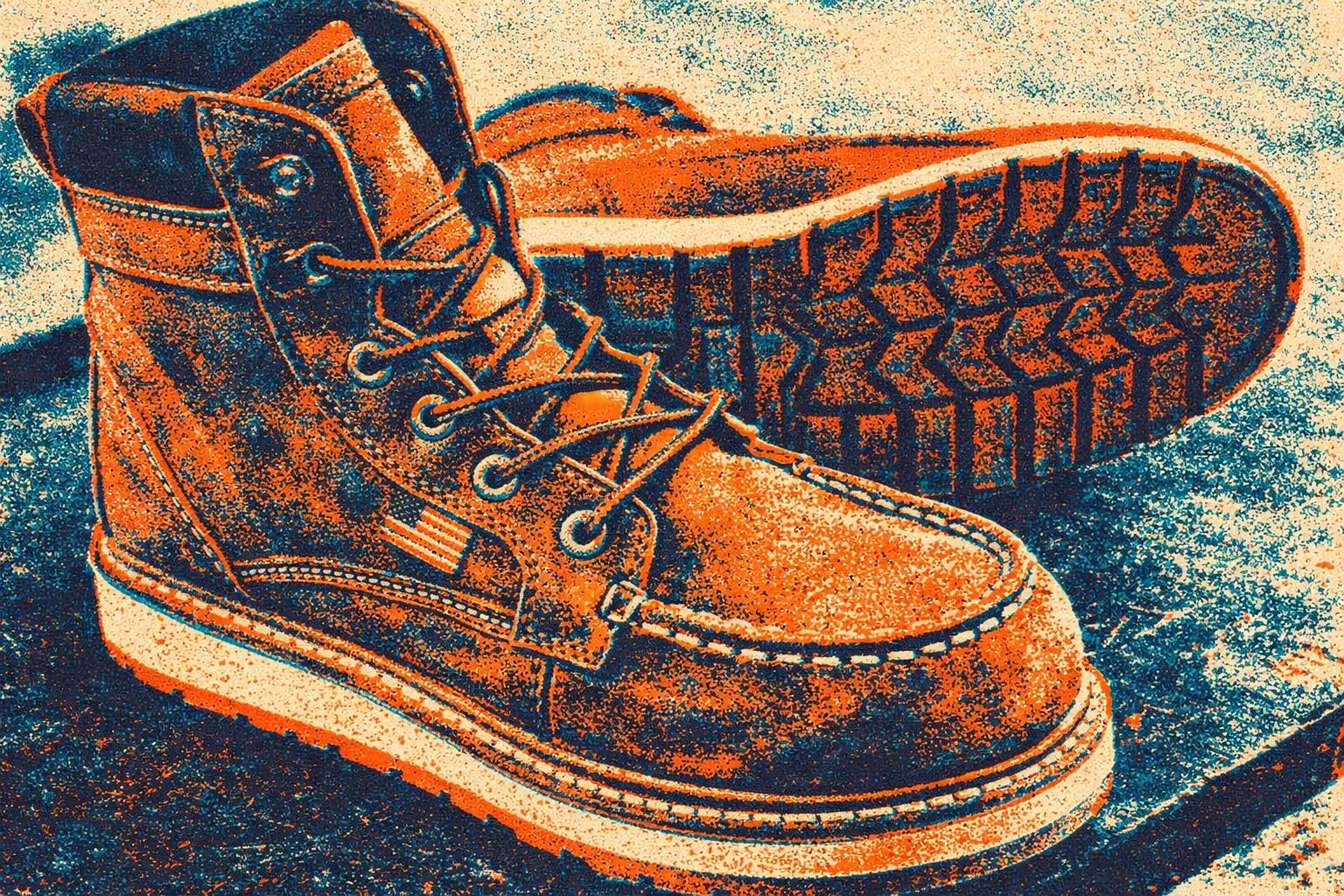
Work boot brand Wolverine built its America 250 effort around the labor angle. The company launched the USA-Built Loader II DuraShocks Wedge boot, manufactured in Texas by local workers. The boot includes 13 traction bars on the outsole, a design detail referencing the 13 stripes of the American flag, along with red, white, and blue stitching on the backstay.
The campaign paired the product launch with an “American Dream” contest honoring workers in all 50 states. Each winner receives a pair of USA-built boots and an American-made flag from Allegiance Flag Supply, a South Carolina manufacturer. Wolverine has operated for more than 140 years and describes itself as America’s leading work boot brand.
The Competitive Field
Zappi’s open-ended responses named Ford the most American brand, with 11% of mentions. Nike came second at 7%, followed by Coca-Cola at 6%. Chevrolet, Walmart, Apple, Budweiser, McDonald’s, Amazon, and Levi’s rounded out the top 10.
Major companies including Walmart and Coca-Cola are sponsoring tributes and selling limited-edition merchandise tied to the anniversary. At the federal level, planning involves two separate entities: America250, established by Congress in 2016, and Freedom 250, created by the White House last year.
For brands, the data points to a clear directive. Patriotic imagery is not a liability, but it is not sufficient. Consumers across age groups reward specificity: local hiring, community investment, and products that back the claim.
Read more: For America 250, customers want positive actions more than patriotic branding