Quick Facts
- Bandit Running has raised over $30 million total, including a $16 million round in 2025.
- Members spend 3.2x more annually than one-time customers and carry an $850 lifetime value versus $120 for non-members.
- The brand’s international expansion runs through local run shop partnerships, including a London capsule with Runlimited during marathon week.
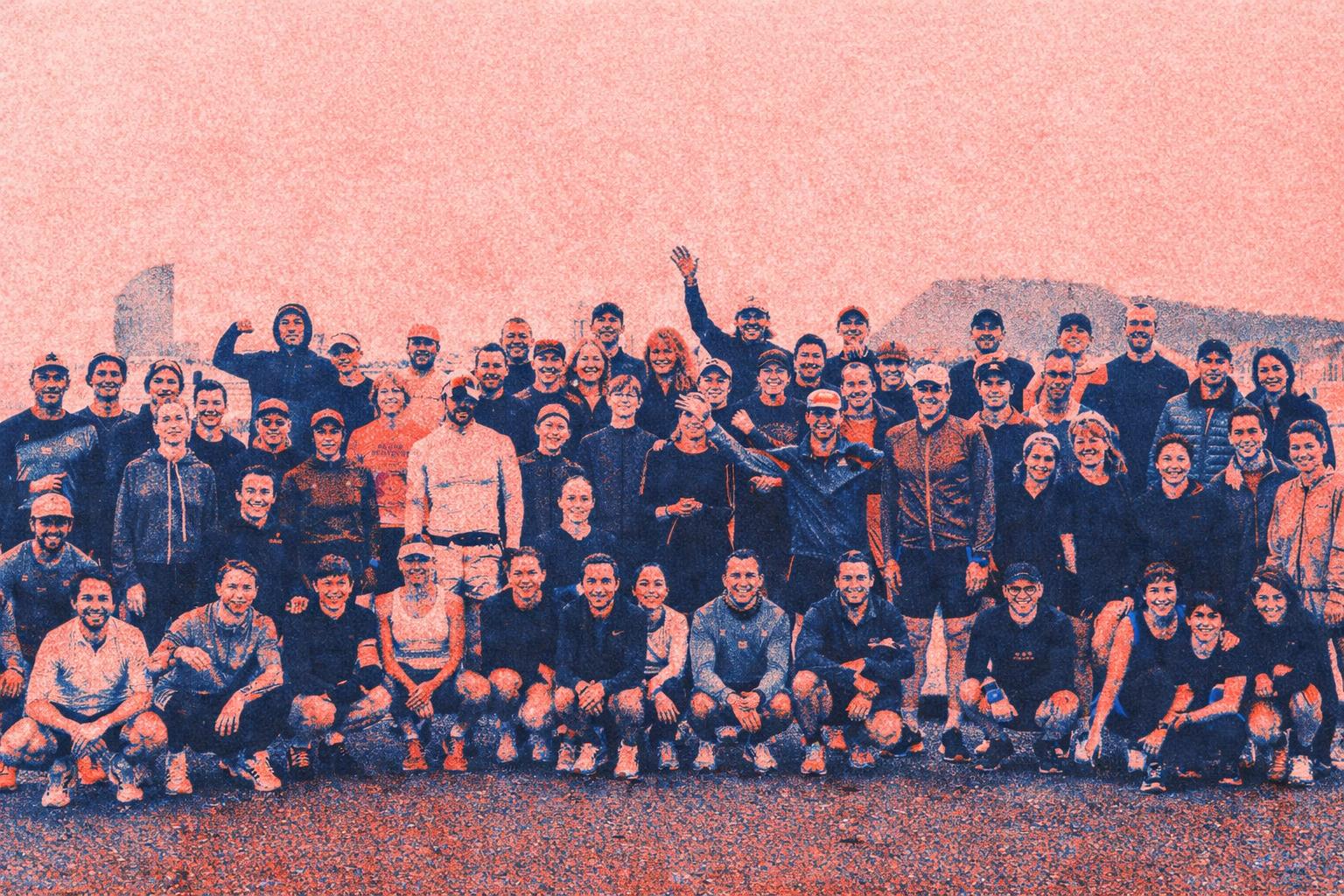
Bandit Running, the Brooklyn-born apparel brand founded in 2020, closed a $16 million funding round in 2025, bringing total capital raised to more than $30 million. The company is using that capital to push into new cities and countries, without abandoning the community-first model that built its early audience.
Brothers Tim and Nick West launched Bandit after stints at Jet.com, the e-commerce startup Walmart acquired in 2016 for $3.3 billion. Tim started with a run of socks for his Brooklyn Track Club in October 2020. Nick joined as CEO in 2021. Co-founder Ardith Singh, former SVP Design at Bandier, joined shortly after as Chief Design Officer.
Stores Built Around the Run
Bandit’s first store sits along a popular running route in Greenpoint, Brooklyn. The brand leaves water out for runners passing through, positioning the shop as a mid-run stop. Its West Village flagship on Bleecker Street, called the Running Room, adds lockers, a cafe, a race-viewing screen, and 7 a.m. opening hours.
In 2025, Bandit opened its first stores outside New York: a standalone location in Chicago and a pop-up inside Renegade Running in Los Angeles. Both follow the same event-calendar format, designed as gathering points before and after group runs.
Going Global Through Local Partners
Rather than enter new international markets with standalone stores, Bandit partners with established local run shops to build credibility before investing in permanent retail. In London, the brand teamed with Runlimited on a ten-piece London Marathon capsule collection covering technical tops, bottoms, and accessories. The collaboration included a weekend of community events and a pop-up in Shoreditch called The Exposition, an alternative marathon expo that also featured New Balance, Coros, Cadence, and Maurten.
Bandit has been direct about the logic. The brand wrote on its own blog: “There is a global network of run specialty shops who talk, run, collaborate, and build community. Without them there is no bedrock of this running industry.”
The brand runs similar activations at the Boston, Tokyo, Berlin, and Chicago marathons. A recent capsule drop with ASICS at the Washington D.C. Cherry Blossom 10 Miler reportedly sold out on day one, with more than 150 people in line before the pop-up opened, according to Reddit posts from attendees.
Membership Drives the Unit Economics
Bandit charges $125 per year for membership. Members spend 3.2x more annually than one-time buyers and refer an average of 2.3 new customers. Member lifetime value reaches $850 compared to $120 for non-members.
The brand also ranks among the highest social media engagement rates in its category. Those numbers suggest the community model is generating profitable customer acquisition, a signal the 2025 fundraise reinforces after several difficult years for direct-to-consumer brands broadly.
The Unsponsored Project
In 2023, Bandit launched The Unsponsored Project, partially funding 10 athletes competing at the U.S. Outdoor Championships. The initiative outfits athletes in unbranded gear to spotlight sponsorship gaps in professional running. By 2024, that number grew to 36 athletes. In 2025, it reached 50.
The athlete program doubles as a marketing channel, giving Bandit visibility at elite competitions without traditional sponsorship costs. It also reinforces the brand’s positioning as an outsider built for the running community rather than against it.
Read more: How Bandit Running is expanding internationally while staying hyperlocal